|


|
|
|


Colorado Auto Insurance Premiums2007 represents the best Colorado auto insurance market for consumers in more than a decade:
Colorado Auto Premiums Continue to Drop Since No-Fault Sunset
To provide a snapshot of Colorado auto premium trends as the state moved from a no-fault to a tort auto insurance system on July 1, 2003, the Property Casualty Insurers of America (PCI) and RMIIA surveyed company premiums before and after the change, using two specific consumer examples for six geographical areas: Denver, Pueblo, Sterling, Fort Collins, Grand Junction and Colorado Springs. Below are six-month auto insurance policy rates for the following risk:
6-month policy in Denver ZIP 80203
6-month policy in Pueblo ZIP 81005
6-month policy in Sterling ZIP 80751
6-month policy in Fort Collins ZIP 80521
6-month policy in Grand Junction ZIP 81504
6-month policy in Colorado Springs ZIP 80918
The 16 companies that provided data represent approximately 50% of the Colorado market. The average rates above are weighted using the statewide premium volume of each participating company. The consumer rate example survey, above, conducted by Property Casualty Insurers Association of America (PCI) and the Rocky Mountain Insurance Information Association (RMIIA) provides a meaningful snapshot because it shows Colorado rate trends for six areas of the state, both urban and rural, and is based on real-life situations. The comparison rates the same 35-year-old married couple with the same risk factors based on average consumer purchasing decisions. The premium survey shows that from June 2003 (under no-fault) to May 2006 (nearly three years with a tort system) a liability-only, six-month auto policy decreased on average from 28-41%. The largest overall decrease for this type of policy from June 2003 to May 2006 was in Pueblo with a 41.7% premium reduction. Denver's average decrease for the same policy was 40.4%. The comparison also breaks down coverage costs for the couple if they opted to purchase $5,000 in medical payments coverage. Under a tort policy with liability and medical payments coverage (the average amount purchased in Colorado and nationally) the overall savings was 16% to 30%. The survey also included premium comparisons with optional comprehensive and collision coverage. Immediate Savings After No-Fault The immediate savings for insurance consumers is that they are no longer required to pay for costly Personal Injury Protection (PIP) coverage. PIP was a mandated no-fault medical coverage that included payment for high-priced, non-traditional treatments leading to very expensive auto insurance for everyone. According to a 2003 study by the Insurance Research Council (IRC) on no-fault states, average Colorado PIP claims soared by 122% from 1997 to 2002, more than double the PIP claim increases in New York, which still rose by 60% in the same five-year period and triple the PIP claims increases in Florida (37%). Colorado consumers felt those increases directly in their pocketbooks in 2002 and 2003, when Colorado PIP premiums rose by as much as 80%. Long-Term Premium & Purchasing Trends How much auto insurance costs the average consumer is an easy question with a complex answer. Since Colorado moved away from no-fault auto insurance, the average cost of a Colorado auto insurance policy is significantly reduced and premiums have begun to stabilize to reflect national market trends. The biggest long-term factors that impact Colorado insurance premiums as the state moves to tort include: 1) how much insurance consumers purchase, 2) individual risk factors, and 3) insurance companies' ability to control and operate without the claims abuses that riddled the state's no-fault system. Of course, the price of what auto insurance pays for will always be the underlying driver of premiums, such as hail storms and the number of motor vehicle accidents. Both nationwide and here in Colorado, people are actually filing fewer claims and the severity of injuries is down, but the cost to pay those claims is higher due to rising cost of medical care, vehicle repair and jury awards. One Size Auto Insurance Doesn't Fit All Colorado consumers now have more control over what they pay for auto insurance. Premiums still depend on traditional risk factors, such as where Coloradans live, what kind of cars they drive and their personal driving records. Colorado drivers are still required to buy liability coverage to pay for medical bills and property damage when they cause an accident, but they now get to decide how much additional health and liability insurance they need to purchase based on their own personal insurance and financial situations. Consumers have not experienced identical savings under the transition from no-fault to tort—what people pay for auto insurance still varies by company and depends on individual risks and purchasing decisions. For example, some Colorado motorists purchase extra medical coverage under their auto policies whether they have health insurance or not. Others use the premium savings from not having to buy auto medical coverage to buy extra liability coverage to protect their personal assets. And some decide that they don't need to increase their liability or medical coverage and spend that extra money on other personal and family expenses. |
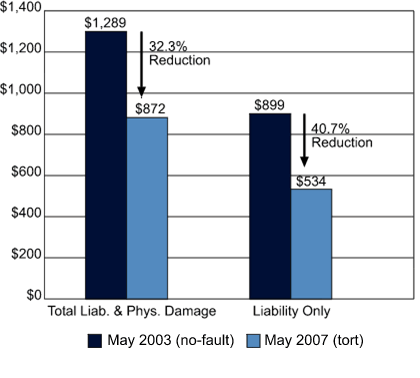 Those double digit decreases represent historic reductions during a time that nationally car insurance rates were still rising, until a 0.5% decrease in 2006. While claim frequency is down countrywide and in Colorado, the cost for car repair and medical treatments is going up. However, Colorado consumers are benefiting from a stabilization of the market since the legislature repealed its no-fault auto insurance system in 2003. Under no-fault, many auto insurance consumers were also paying twice for health insurance and extra medical coverage under their car insurance, not to mention military and others who received government-funded medical coverage who were paying for expensive mandated auto insurance that they didn't need.
303-790-0216 • 800-355-9524 • Contact Us • Legal Notice, Disclaimer & Terms of Use
Home • About RMIIA • News Room • P&C Insurance Industry • Auto • Homeowners • Business • Catastrophes • Agent Resources • Events & Education • Brochures