|
7951 E. Maplewood Avenue, Suite 110
Greenwood Village, Colorado 80111
Serving Colorado, New Mexico, Utah & Wyoming
Contact: Carole Walker, Executive Director
303-790-0216 or toll free 800-355-9524
Colorado Residents Affected by Yesterday's Storms Urged to Contact Insurers
May 23, 2008 – Colorado residents affected by yesterday's powerful storms are beginning to sort through the wreckage and pick up the pieces. Fortunately, homeowners insurance covers damage from tornadoes and hail, and damage to vehicles is covered if you carry comprehensive insurance on your auto policy. Though it is too early to estimate the total damage and cost of this powerful storm, insurance companies are busy helping customers get back on their feet. Many are setting up mobile claims service centers in the areas most affected by the storms, such as Windsor and Greeley.
“Residents who suffered damage from yesterday's storms should contact their insurance agent or company representative immediately. Homeowners who are staying elsewhere need to let their company know how they can be reached,” says Carole Walker, executive director of the Rocky Mountain Insurance Information Association. “Homeowners insurance also typically provides homeowners some extra out-of-pocket living expenses when they are forced out of their home due to a total loss, severe structural damage or a mandatory evacuation resulting from a tornado or other natural disaster.”
Tornado & Hail Damage Background
Colorado can average 30-40 tornadoes a year with most occurring in late spring and early summer. Colorado's most costly insured tornado losses were from the Limon Tornado on June 6, 1990 resulting in $20 million in damage or $30.8 million in today's dollars. Colorado's tornadoes have not added up to large insurance damage because they have historically touched down in less populated areas and the damage is typically more isolated than say a widespread hailstorm. Colorado's most costly insured catastrophe was from a July 11, 1990 hailstorm that hit along the Front Range causing $625 million in damage – that's nearly $1 billion in today's dollars. For more background on Colorado's most costly insured catastrophes: www.rmiia.org/Catastrophes_and_Statistics/catastrophes.asp
Claims Filing Advice
The Rocky Mountain Insurance Information Association has this advice for affected residents filing claims for damage.
- Be prepared to give your agent or insurance representative a description of any damage. Your agent will report the loss immediately to your insurance company or a qualified adjuster. Some companies also have 24-hour, 800 numbers for claims assistance.
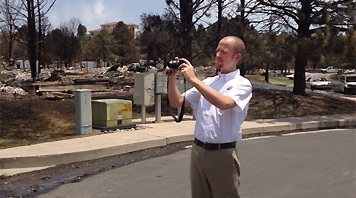
- Take photos of the damaged areas. These will help with your claims process and will assist the adjuster in the investigation.
- Prepare a detailed inventory of all damaged or destroyed personal property. Be sure to make two copies—one for yourself and one for the adjuster. Your list should be as complete as possible, including a description of the items, dates of purchase or approximate age, cost at time of purchase and estimated replacement cost.
- Make whatever temporary repairs you can. Cover broken windows, damaged roofs and walls to prevent further destruction. Save receipts for supplies and materials you purchase. Your company will reimburse you for reasonable expenses in making temporary repairs.
- Secure a detailed estimate for permanent repairs to your home from a reliable contractor and give it to the adjuster. The estimate should contain the proposed repairs, repair costs and replacement prices.
- Serious losses will be given priority. If your home has been destroyed or seriously damaged, your agent will do everything possible to assure that you are given priority.
Tips for Hiring a Contractor:
Hiring a reputable contractor to do repairs or construct a new home is critical. Word of mouth is still one of the best ways to choose a contractor. Also check with the area Home Builders Association, Better Business Bureau or Chamber of Commerce. Make certain they are licensed and have adequate insurance coverage.
Don't become a victim of disaster fraud. After a natural disaster, professionals often go from door-to-door in damaged neighborhoods, offering clean up or repair services. Many of these business people are reputable. Others are not. The dishonest ones may pocket payment without completing the job or use inferior materials and perform shoddy work not up to code.
- Get more than one estimate. Don't be pushed into signing a contract right away.
- Get everything in writing. Cost, work to be done, materials, time schedule, guarantees, payment schedule and other expectations should be detailed.
- Demand references and check them out.
- Ask to see the salesperson's driver's license and write down the license number and license plate number.
- Ask for proof that the contractor is bonded, carries liability insurance, and covers his/her workers with workers compensation insurance.
- The contractor's business card should have a verifiable street address and office phone number.
- Never sign a contract with blanks; unacceptable terms can be added later.
- Never pay a contractor in full or sign a completion certificate until the work is finished. Request a lien waiver indicating the contractor has paid its subcontractors and suppliers.
- Insurance coverage may be rendered void if intentional misrepresentation by a policyholder is discovered.
- If you believe you have been approached by an unlicensed contractor or adjuster, or have been encouraged to fabricate an insurance claim, contact your insurance company or call the National Insurance Crime Bureau Hotline at 1-800-TEL-NICB (1-800-835-6422).
###
Rocky Mountain Insurance Information Association is a non-profit consumer information organization. Affiliated with the Insurance Information Institute, RMIIA has been serving consumers and the media since 1952.
|