|
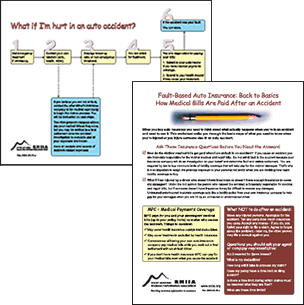
1. Get emergency treatment if necessary.
2. Contact your own insurers (auto, health, other).
-
If you believe you are not at-fault, contact the other driver's insurance company at the earliest opportunity to begin the claims process. You will be instructed on next steps.
-
The other person's insurer will not pay your medical bills as they arise, but you may be entitled to a final settlement once the accident investigation is complete and all your expenses are known.
-
Save all receipts and records of accident-related expenses.
3. Arrange follow-up care or non-emergency treatment.
4. You are billed for treatment.
5. You are responsible for paying your bills:
- Submit to your auto insurance carrier if you have medical payments coverage.*
- Submit to your health insurer if they cover your treatment.*
6.a. If the accident was your fault: You are done with the claims process.
OR...
6.b. If the accident was the other driver's fault:*
-
Contact the at-fault driver's insurance company for final settlement. Be aware that others, such as medical providers, health insurers or attorneys, may be entitled to some or all of your settlement.
-
If the at-fault driver is uninsured, but you have uninsured motorist coverage, call your own auto insurer to discuss your final settlement.
 *If you live in one of the few states with a "no-fault" auto insurance system, you pay for a mandatory amount of medical coverage on your own auto insurance policy. File your medical claims with your own auto insurance company first. Depending on your state's no-fault law, you may not be entitled to a settlement from the at-fault driver. *If you live in one of the few states with a "no-fault" auto insurance system, you pay for a mandatory amount of medical coverage on your own auto insurance policy. File your medical claims with your own auto insurance company first. Depending on your state's no-fault law, you may not be entitled to a settlement from the at-fault driver.
|




